 Phones and Accessories
 Computers and Accessories
 Men Clothing & Fashion
 Women Clothing and Fashion
 Home Improvement & Tools
 Jewelry & Accessories
 Health and Beauty
 Skincare
 Photochromic Glasses (Lens)
 Smart watch
 Food and Groceries
 Animals & Pet Supplies
 Apparel & Accessories
 Arts & Entertainment
 Baby & Toddler
 Business & Industrial
 Cameras & Optics
 Electronics
 Food, Beverages & Tobacco
 Furniture
 Hardware
 Health & Beauty
 Home & Garden
 Luggage & Bags
 Mature
 Media
Media Office Supplies
 Religious & Ceremonial
 Software
 Sporting Goods
 Toys & Games
 Vehicles & Parts


The 'Everybody' Trap: Why Targeting 'Everyone in Nigeria' is Killing Your Facebook Ad ROI
Table of Contents
The N100,000 Heartbreak: When 'Everyone' Means 'No One' The Myth of the 200 Million Audience The Logistics Nightmare: Why Geography Matters How to Stop the Bleeding: A Better Strategy The Power of Exclusion Conclusion: Quality Over Quantity The Trust Factor and Verification Editor's Choice: The Quality Standard 1. Filter by Purchasing Power 2. Focus on 'The Big Cities' First 3. Use the 'Engaged Shoppers' Behavior

The N100,000 Heartbreak: When 'Everyone' Means 'No One'
Imagine this: You’ve just stocked up on a hot new product. You’ve spent hours taking the perfect photos, writing a caption that would make a poet weep, and you finally head over to your Facebook Ads Manager. You feel a surge of adrenaline. You see that 'Audience Size' estimator tick up as you select 'Nigeria.' 20 million, 30 million, 40 million people! You think to yourself, 'If only 1% of these people buy, I’ll be a millionaire by Friday.'
You set your budget, hit publish, and wait. The likes start rolling in. You get a few 'How much?' comments. You even get a 'God bless your work' from someone in a village you’ve never heard of. But forty-eight hours later, your bank account is silent. Your dashboard shows you’ve spent N50,000, but your Shopify or WhatsApp orders are at a big, fat zero. What went wrong?
The answer is simple, yet painful: You fell into the 'Everybody' Trap. In the world of Nigerian e-commerce, targeting 'everyone' is the fastest way to donate your hard-earned money to Mark Zuckerberg without getting a single kobo in return.
The Myth of the 200 Million Audience
We take pride in being the 'Giant of Africa.' We love talking about our population of over 200 million people. But as a business owner, you must realize that Nigeria is not a single market. It is a collection of thousands of micro-markets, divided by purchasing power, internet literacy, logistics accessibility, and cultural nuances.
When you target 'Everyone in Nigeria,' you are asking Facebook’s algorithm to show your ad to a 19-year-old student in a rural part of Kebbi who is just looking for entertainment, a billionaire in Banana Island who only buys designer labels from London, and a mother in Onitsha who is looking for school shoes for her kids. These three people have different needs, different budgets, and most importantly, different levels of trust in online shopping.
The Logistics Nightmare: Why Geography Matters
Let’s talk about the 'Last-Mile' problem. This is where most Nigerian e-commerce dreams go to die. If your ad reaches someone in a remote area of Taraba State, and they actually want to buy your product, can you deliver it? More importantly, can you deliver it without the shipping cost being three times the price of the item?
Logistics in Nigeria is a complex beast. By targeting 'Everyone,' you are wasting ad spend on regions where delivery is either impossible or deep into the 'Red Zone' of high-risk returns. Professional sellers know that focusing on hubs with established logistics networks—like Lagos, Abuja, Port Harcourt, and Ibadan—drastically reduces your 'Return to Sender' (RTS) rate.
This is where platforms like Kanemtrade become essential. By utilizing verified systems and understanding the logistics landscape, you can narrow your targeting to areas where you can actually fulfill orders profitably. Targeting people in areas where Kanemtrade or other reliable couriers have a strong presence ensures that your marketing spend leads to successful deliveries, not just frustrated customers.
The Trust Factor and Verification
Nigerian consumers are arguably the most skeptical shoppers in the world. And who can blame them? From 'What I ordered vs. What I got' to outright scams, the Nigerian buyer is constantly on guard. When you target a broad, cold audience, you are fighting an uphill battle against a lack of trust.
Precision targeting allows you to focus on 'Engaged Shoppers'—people who have a history of clicking 'Shop Now' buttons. Even better, it allows you to target people who value quality and verification. A buyer who sees your ad and knows you are a verified seller on a reputable platform is ten times more likely to pull out their card (or prepare their cash for delivery) than a random person scrolling through their feed.
Editor's Choice: The Quality Standard
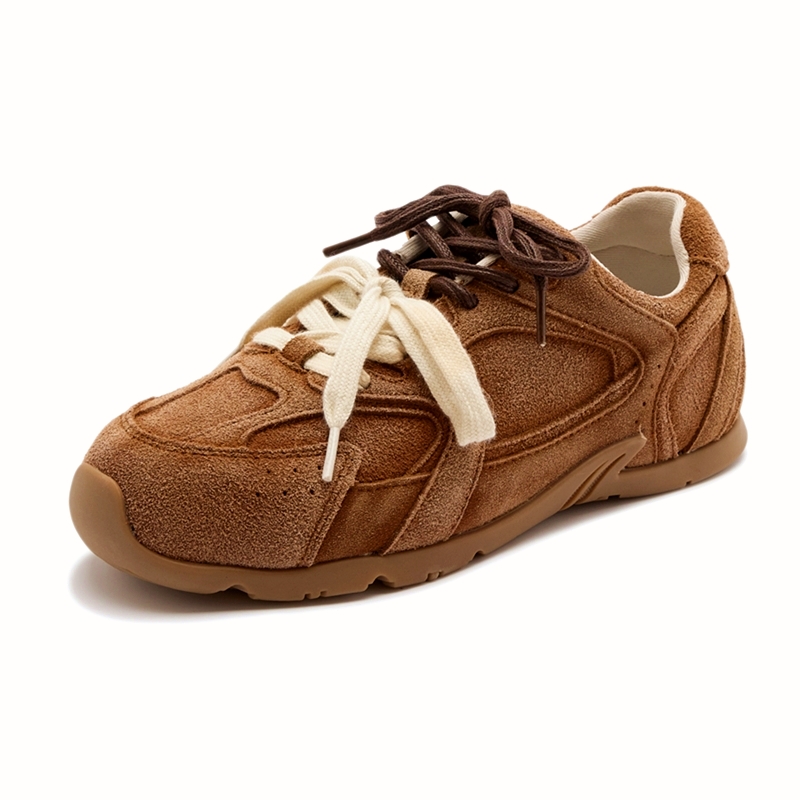
Before we dive into the 'How-To' of targeting, it is important to remember that even the best ads can't save a bad product. For sellers looking to capture the attention of the sophisticated, urban Nigerian woman, quality is the only language that works. For instance, the DIMANYU Genuine Leather Gump Shoes Women 2025 Spring New Retro Lace-up Sneakers are a perfect example of a product that caters to a specific, high-intent audience. These aren't just 'shoes'; they are a blend of retro style and genuine leather durability designed for the woman who values both comfort and a 'boss lady' aesthetic. When you target the right woman—perhaps an office professional in Lagos or a boutique owner in Abuja—the product practically sells itself.
How to Stop the Bleeding: A Better Strategy
If you want to stop wasting money, you need to move from 'Broad' to 'Behavioral.' Here is how you should actually be setting up your Nigerian Facebook Ads:
1. Filter by Purchasing Power
Don't just target by age. Target by interest in high-end brands, frequent international travel, or 'Facebook Page Admins.' These are often indicators of people who have disposable income. If you are selling premium items, targeting 'People who prefer high-value goods in Nigeria' is a game-changer.
2. Focus on 'The Big Cities' First
Unless you have a massive warehouse and a private delivery fleet, start with the 'Tier 1' cities. Create a campaign specifically for Lagos and Abuja. Why? Because the inhabitants of these cities are accustomed to online shopping, they have better internet connectivity, and your logistics costs will be lower.
3. Use the 'Engaged Shoppers' Behavior
In the 'Detailed Targeting' section of your Facebook Ads Manager, always try adding 'Engaged Shoppers' under the 'Interests > Behaviors > Purchase Behavior' tab. This narrows your audience to people who have clicked the call-to-action button 'Shop Now' in the past week. It cuts out the 'window shoppers' and focuses on the 'buyers.'
The Power of Exclusion
One of the most underutilized tools in Nigerian Facebook marketing is the 'Exclude' feature. You can exclude people who are interested in 'Cheap' or 'Free' things if you are selling luxury. You can exclude certain states where you know your logistics provider cannot reach effectively. By saying 'No' to the wrong people, you are saying 'Yes' to a higher profit margin.
Conclusion: Quality Over Quantity
In the end, e-commerce success in Nigeria isn't about how many people see your ad; it’s about who sees your ad. It’s about ensuring that your product—whether it’s high-end electronics or genuine leather sneakers—is shown to the person who has the money to buy it, the location to receive it, and the trust to believe in your brand.
Stop trying to talk to 200 million people. Start talking to the 50,000 people who are actually looking for what you have to sell. Your bank account—and your sanity—will thank you. Use platforms like Kanemtrade to verify your business, tighten your logistics, and watch your conversion rates soar. Remember, in the Nigerian market, precision beats popularity every single time.