 Phones and Accessories
 Computers and Accessories
 Men Clothing & Fashion
 Women Clothing and Fashion
 Home Improvement & Tools
 Jewelry & Accessories
 Health and Beauty
 Skincare
 Photochromic Glasses (Lens)
 Smart watch
 Food and Groceries
 Animals & Pet Supplies
 Apparel & Accessories
 Arts & Entertainment
 Baby & Toddler
 Business & Industrial
 Cameras & Optics
 Electronics
 Food, Beverages & Tobacco
 Furniture
 Hardware
 Health & Beauty
 Home & Garden
 Luggage & Bags
 Mature
 Media
Media Office Supplies
 Religious & Ceremonial
 Software
 Sporting Goods
 Toys & Games
 Vehicles & Parts


The Bitter Truth: Why Most 'Dropshipping Coaches' Don't Actually Run Real E-commerce Stores
Table of Contents
The Instagram Illusion: Why the Laptop Lifestyle in Lagos is Often a Lie The 'Passive Income' Trap vs. The Reality of Nigerian Logistics The Complexity of Verification and Trust in the Digital Space How to Spot a Real E-commerce Professional from a 'Course Seller' Building a Real Legacy, Not a Ghost Store The Profit Margin Secret: Why They Sell Courses, Not Caps Handling 'Pay on Delivery' – The Guru's Nightmare

The Instagram Illusion: Why the Laptop Lifestyle in Lagos is Often a Lie
You’ve seen the sponsored ads on Instagram and TikTok. A young man, perhaps standing in front of a shiny G-Wagon in Lekki or sitting in a high-rise office in Abuja, flashing screenshots of Shopify dashboards with figures that look like phone numbers. He tells you that e-commerce is 'easy,' that you can make millions while you sleep, and that all you need is his 50,000 Naira masterclass to unlock the secrets of dropshipping. But have you ever stopped to ask: If this business is so profitable and 'passive,' why are they spending eighteen hours a day trying to sell you a PDF instead of selling actual products?
The reality of the Nigerian e-commerce landscape is vastly different from the polished videos you see online. For the average Nigerian entrepreneur, the 'hustle' is real, and it is physical. It involves navigating the complexities of the Lagos ports, arguing with delivery riders who suddenly 'lose' their way in Ogba, and managing the unique 'Pay on Delivery' culture that makes international dropshipping models almost impossible to execute locally without a massive headache.
The 'Passive Income' Trap vs. The Reality of Nigerian Logistics
Dropshipping, in its purest form, sounds like a dream. You list a product, a customer buys it, you order it from a supplier in China, and the supplier ships it directly to the customer. No inventory, no warehouse, no stress. Right? Wrong. In Africa, and specifically in Nigeria, logistics is the graveyard of many ambitious startups. Between the fluctuation of the Naira against the Dollar and the unpredictable nature of international shipping, the traditional dropshipping model often collapses under its own weight.
Most so-called 'coaches' know this. They know that if they actually tried to run a store selling gadgets or fashion items using the models they teach, they would be bogged down by customer service complaints, delayed shipments, and the dreaded 'This is not what I ordered' phone calls. It is much easier—and significantly more profitable—to sell 'knowledge' than it is to sell physical goods. A digital course has a 100% profit margin, no shipping fees, and no returns. They aren't in the e-commerce business; they are in the 'selling-the-dream' business.
The Profit Margin Secret: Why They Sell Courses, Not Caps
Running a real store requires capital, patience, and a deep understanding of the market. When you sell a physical product, you have to account for the cost of goods, marketing (which is becoming more expensive by the day on Meta and Google), and the high risk of delivery failure. In Nigeria, the 'Return to Origin' (RTO) rate for e-commerce can be as high as 30% for Pay on Delivery orders. That is a profit-killer.
The gurus avoid this by pivoting. They might have run one semi-successful store in 2018 for two months, and they have been using those same screenshots ever since to convince you that they are experts. They aren't dealing with the daily struggle of sourcing quality materials or verifying suppliers. They are simply recycling old information and selling it to the next generation of hopeful 'japa' seekers who want a way out of the economic hardship.
Editor’s Choice: The Mark of a True Professional
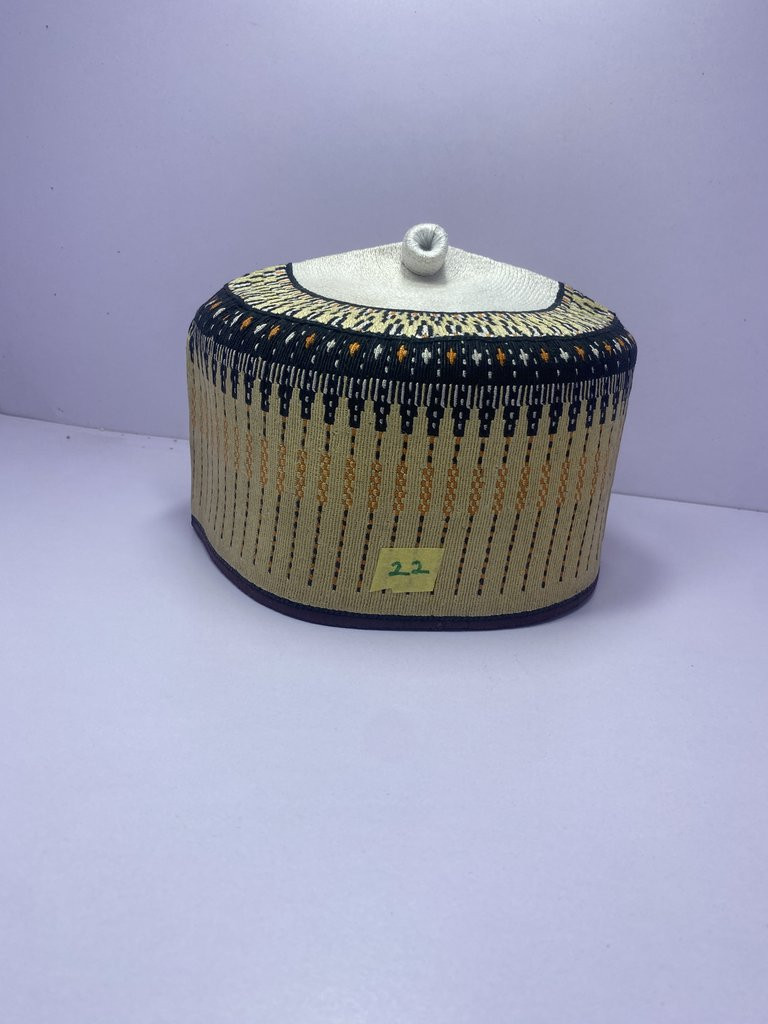
While many are chasing shadows, those who understand the value of real commerce know that presentation and tradition matter. Whether you are meeting a major supplier or closing a deal with a logistics partner, looking the part is essential. Our Army Stripped – Hausa/Fulani Cap (Zawa) is a handwoven masterpiece that speaks of authority and heritage. It is not just a kufi; it is a statement of intent for the serious businessman who values authenticity over hype.
The Complexity of Verification and Trust in the Digital Space
In Nigeria, trust is the currency of the realm. We have been 'burnt' too many times by 'what I ordered vs. what I got.' This is why platforms like Kanemtrade are so vital. Real e-commerce in Nigeria isn't just about a website; it’s about verification. It’s about knowing that the person you are buying from has been vetted and that the logistics chain is secure.
Dropshipping coaches usually skip the 'trust' part of the conversation. They don't tell you how hard it is to get a payment gateway like Paystack or Flutterwave to verify your business without a registered CAC and a physical address. They don't talk about the 'trust deficit' that makes a customer in Port Harcourt hesitant to pay a store owner in Kaduna upfront. They sell you a 'global' model that ignores the very 'local' problems we face every day at the Ikeja computer village or the Onitsha main market.
Handling 'Pay on Delivery' – The Guru's Nightmare
Ask a dropshipping coach how they handle a customer in Kano who chooses 'Pay on Delivery' for a product that is being shipped from Shenzhen, China. They won't have a straight answer. Why? Because the model doesn't work that way. To succeed in Nigerian e-commerce, you often need to hold local stock. You need a warehouse, or at least a trusted fulfillment partner, who can get the item to the customer's doorstep in 48 hours.
This requires 'skin in the game.' It requires real investment. The coaches don't want to do that. They want to sit in a cafe, drink lattes, and watch 'passive' income roll in from their course sales. They aren't interested in the grit of the Nigerian marketplace. They are teaching you a version of e-commerce that exists only in textbooks and Silicon Valley blogs, not on the streets of Lagos.
How to Spot a Real E-commerce Professional from a 'Course Seller'
So, how do you tell if someone is the real deal? Here are a few signs:
- They show you the 'ugly' side: Real owners talk about lost packages, bad suppliers, and the days they lost money on ads.
- They emphasize local logistics: They understand the importance of having a reliable dispatch rider and the nuances of interstate delivery in Nigeria.
- They use verified platforms: They don't hide behind anonymous websites; they use reputable marketplaces like Kanemtrade to build their reputation.
- They have physical proof: Not just screenshots, but physical inventory and real customer reviews from people you can actually reach out to.
Building a Real Legacy, Not a Ghost Store
At the end of the day, e-commerce is a beautiful, rewarding business, but it is a business, not a magic trick. It requires the same dedication as a brick-and-mortar shop in Balogun Market. The goal should be to build a brand that lasts—a brand that people trust because you consistently deliver value.
Don't be discouraged by the fake gurus. Use their 'theories' as a starting point if you must, but quickly move into the real world. Partner with platforms that understand the African context, focus on high-quality products that people actually need, and solve the logistics puzzle. That is how you build wealth that doesn't disappear when the Instagram algorithm changes. Real e-commerce is about the product, the person, and the persistence to see a delivery through to the very end.